About
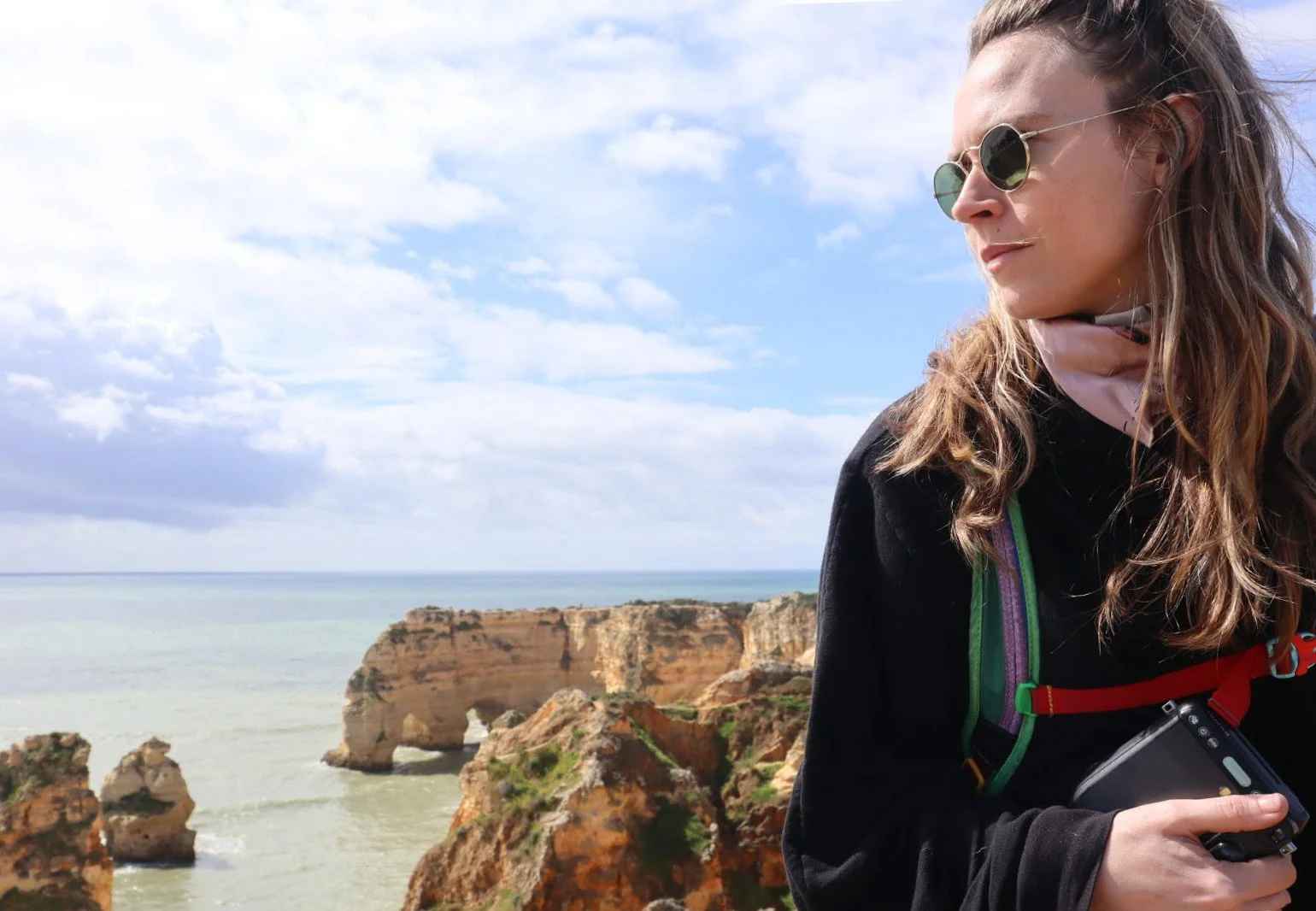
I’ve always felt that About Me sections focus on the wrong things. It’s impossible for me to talk about my writing without acknowledging that my work—and my life—began with my teachers, friends, family, and experiences.
My writing doesn’t feel like it is of me, but rather culminates in me.
The Family That Carried Their House on Their Backs began when I was child. Growing up, my mother was the librarian at my elementary school. The school had just opened after being shuttered for over thirty years and the library was filled with the dust of decades. She was a single mom and didn’t have the option for daycare, so every night as she perfected her little world, my sister and I spent hours hidden under tables reading every fairy tale retelling we could get our hands on. As a child, I loved fairy tales for their beauty, for their inexplicable sadness, for women discovered and redeemed through their love.
My love of poetry began when I was nine years old, and I performed in a play about William Blake at a local Denver Theater. The playwright, Karl Kopp, instilled in me a strong belief in the mystical and transformative power of words. It was Karl who encouraged me to apply to Denver School of the Arts. Over the course of five years, Jana Clark and the DSA writing program transformed a lonely thirteen-year-old girl into someone who didn’t have any answers but faith in her questions.
Later, the Louis August Jonas Foundation and Camp Rising Sun introduced me to women from all over the world and taught me both the extreme limitations of my experience as well as the power of my unique voice.
Through a program at CU, Monica Sparks introduced me to Gabriel Garcia Marquez, Shakespeare, and Carson McCullers, and helped me see that what is unreal is often the most real.
But it was Professor Joshua Corey at Lake Forest College who liberated my rigid ideas about writing. He introduced me to Anne Carson and Lidia Yuknavitch. I felt like all my life I’d been looking out the window and suddenly there was no window, no house, I was simply in the world and there were no limits.
Later, I became disillusioned with writing and craved communion with other writers. So I took a class with Mark Mayer through the Lighthouse Writers Workshop and for the first time began to feel interested in the work of writing. He helped me understand that returning to a piece day after day was part of the joy of writing. The finished product was only a bonus for the intimacy and devotion you developed with your idea.
Since childhood, I’d thought Swan Lake and Beauty and the Beast were stories about how true love makes us different than ourselves. I thought the magic was in the final form. The beast becomes a man again! The Swan Princess is freed! But it was through my work with Mayer, that I understood these stories aren’t about being trapped in the wrong body and finally made right. They are about the change itself. And, in the end, that’s what I want out of any piece of writing, what I want out of my life—to enter and feel transformed.
In the acknowledgements of Be Holding Ross Gay says it best:
Nothing I write I write by myself. Everything I write, by which I mean everything, I write with and for and from others, which is a way of saying, always, debt. Which is a way of saying, always, gratitude. A way of saying, always, I am beholden.
As a writer, and a person, I want to work, to learn, to be influenced, to share and be shared, to be beholden.